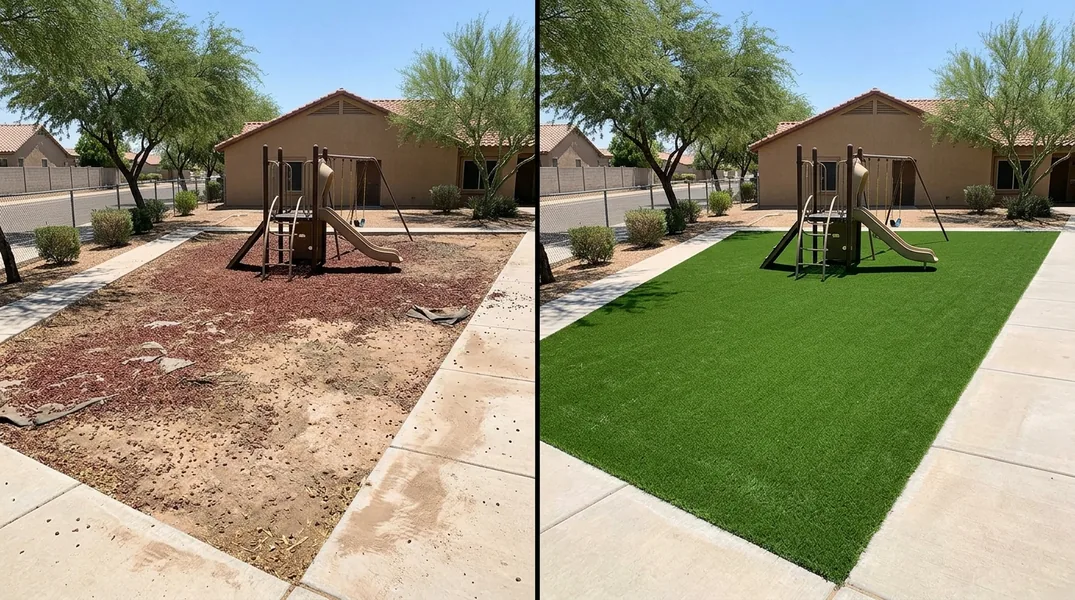
Why Base Preparation Matters in Chandler Yards
When homeowners in Chandler decide to install artificial grass, they often focus on the turf itself and overlook one of the most critical factors in a successful installation: proper base preparation. The foundation beneath your artificial grass determines whether your lawn will last 10 years or fail within 2 to 3 years. This is especially true for properties built on caliche or those with a history of flood irrigation, both common conditions in the greater Phoenix area.
The desert soil composition in Chandler presents unique challenges that mainland or coastal installers may never encounter. Caliche, a naturally occurring calcium carbonate layer, acts like concrete beneath the surface. When water cannot drain through this impermeable layer, it pools under your artificial grass, creating a breeding ground for mold, algae, and odor. Flood-irrigated properties, meanwhile, have compacted soil that drains poorly and may contain mineral deposits from years of agricultural watering. Without addressing these issues during installation, even premium artificial grass will fail prematurely. That is why understanding artificial grass drainage and what to put under artificial grass is essential before you commit to the investment.
Understanding Caliche: The Hidden Challenge Beneath Your Yard
Caliche is a hardpan layer formed over thousands of years as minerals accumulate in the soil. In Chandler, many residential lots have caliche at depths ranging from 12 inches to 4 feet below the surface. When you install artificial grass directly over caliche without proper preparation, water from rain or irrigation has nowhere to go. It collects in a saturated zone just above the caliche layer, creating conditions that promote root rot in any living plants and deterioration of the turf backing and infill materials.
The solution involves either breaking through the caliche layer or creating an effective drainage pathway around it. Professional installers use equipment to perforate or remove the caliche in strategic areas, allowing water to percolate deeper into the soil profile. In some cases, the caliche may be broken up and left in place, then topped with a permeable base layer. The key is ensuring that water does not pool directly beneath your artificial grass. This is a critical component of proper turf base prep and cannot be skipped if you want your investment to perform well for years to come.
What to Put Under Artificial Grass: Layers and Materials
Once the caliche issue is addressed, the next step is building the proper base structure. What to put under artificial grass is not a one-size-fits-all answer, but most professional installations in Chandler follow a proven layering system. The foundation typically consists of a compacted subgrade, followed by a drainage layer, a cushioning base, and finally the artificial turf underlay. Each layer serves a specific purpose in managing water, providing stability, and extending the life of your turf.
The first layer is the compacted subgrade, which is the existing soil after any caliche removal or remediation. Above that, many installers place a layer of coarse rock or recycled asphalt to promote drainage and prevent water from pooling. Next comes a layer of crushed stone or gravel, typically 2 to 4 inches thick, which further aids drainage and provides a stable base for the turf. On top of this, a artificial grass underlay or base fabric is installed. This geotextile material prevents the turf from settling unevenly, provides additional cushioning, and helps with drainage. Finally, the artificial grass itself is laid and secured. Each layer is essential, and skipping any of them can compromise the performance of your installation.
Managing Flood-Irrigated Lot Conditions
Properties that were previously flood-irrigated present their own set of challenges. Decades of flood irrigation compact the soil and create a dense, clay-heavy layer that drains poorly. Additionally, mineral salts and alkali deposits may have accumulated in the upper soil profile, creating an inhospitable base for artificial grass installation. When you pour water over compacted, alkali-laden soil, it does not drain effectively, and the minerals can react with moisture to create a crusty, unstable surface.
To address these conditions, the base prep process begins with soil analysis and often includes breaking up the compacted layer and, in some cases, removing the top few inches of soil if mineral content is excessive. A proper drainage system must then be installed, including perforated drain lines if necessary, to ensure that water moves away from the artificial grass rather than pooling beneath it. This is why Residential Artificial Grass Installation on flood-irrigated lots requires more planning and expertise than installation on virgin or well-drained soil. The investment in proper base preparation on these challenging properties pays dividends in the form of a lawn that remains beautiful and functional for 10 to 15 years or more.
Artificial Grass Drainage Systems: Ensuring Water Moves Away
Artificial grass drainage is not just about the materials you install; it is also about the design and slope of the base. Water must have a clear path away from your lawn, whether it flows into existing drainage systems, toward a low point in your yard, or into a dry well. Without proper slope and drainage design, even the best base materials will fail. A professional installation includes a site assessment to determine the natural drainage patterns and to plan the base accordingly.
In many Chandler yards, this means creating a gentle slope that directs water away from the house and toward landscaping or hardscape areas that can handle it. If your yard is relatively flat or has natural low spots, the installer may need to create a French drain, install a perforated drain line beneath the turf, or construct a small dry well to capture and disperse water. These systems are designed to work silently and invisibly, but they are absolutely critical to the longevity of your artificial grass. Without them, you may face standing water, odor, mold, and premature failure of the turf backing within just a few years.
Why Professional Installation Matters: Avoiding Costly Mistakes
While DIY artificial grass installation might seem like a way to save money, the reality is that improper base preparation is one of the most common reasons artificial grass fails. Homeowners who skip the caliche removal, underestimate drainage needs, or use inadequate underlay materials often find themselves replacing their turf within a few years. The cost of removing and reinstalling artificial grass is far greater than the cost of doing it right the first time. Professional installers like Chandler Turf Installation bring experience, equipment, and knowledge of local soil and climate conditions that ensure your installation will perform as intended.
When you hire a professional for Residential Artificial Grass Installation, you are paying for expertise in diagnosing site-specific challenges, selecting appropriate materials, and executing proper installation techniques. For properties with caliche or flood-irrigated history, this expertise is not optional. It is the difference between a lawn that thrives for over a decade and one that fails prematurely. If you are ready to move forward with an installation in Chandler, contact Chandler Turf Installation at (623) 323-1913 to discuss your site and get a free estimate. Our team will assess your soil conditions, recommend the appropriate base preparation, and ensure your artificial grass is built to last.
Looking for a professional artificial grass installation company in Chandler? Chandler Turf Installation responds fast for all your artificial grass installation needs.
Get a Free Quote